 Skip to content


We recently treated penetrating (lateral) damp in a lower ground floor flat on Harcourt Gardens, SW10 – a converted end-of-terrace period building from the late 1800s. The flat had damp, salt-stained plaster along the base of the external walls in several rooms.
Project at a glance
| Location | Harcourt Gardens, London SW10 |
| Property | Lower ground floor flat in a converted Victorian end-of-terrace |
| Project type | Penetrating (lateral) damp treatment |
| Work carried out | Injected damp-proof course and salt-resistant replastering to BS 6576 |
| Duration | About 1 week |
| Guarantee | Written guarantee |
The brief
The client asked us to find out why the walls in the flat were damp and to put it right before the flat was redecorated. We carried out a full damp survey first, then quoted for the treatment.
What we found
Our survey showed moisture getting into the solid masonry walls from the side. Like many lower ground floor flats in London, the ground outside is higher than the floor inside, so damp soil sits against the walls and moisture is pushed through laterally, leaving salts building up in the old plaster.
What we did
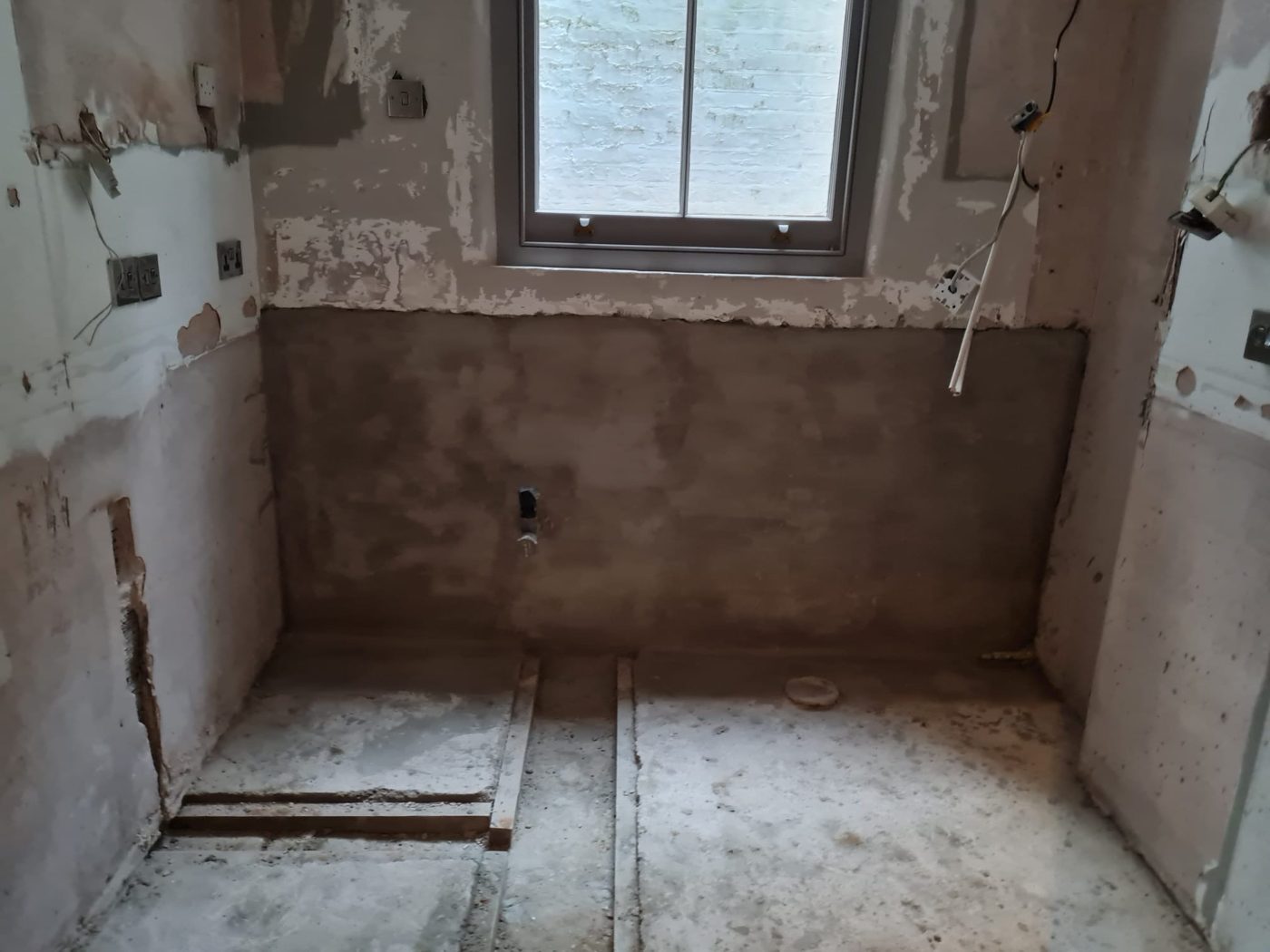
- Hacked off the old plaster to about 1 metre high, removing all the salt-contaminated material.
- Injected a new damp-proof course into the brickwork along the base of the affected walls.
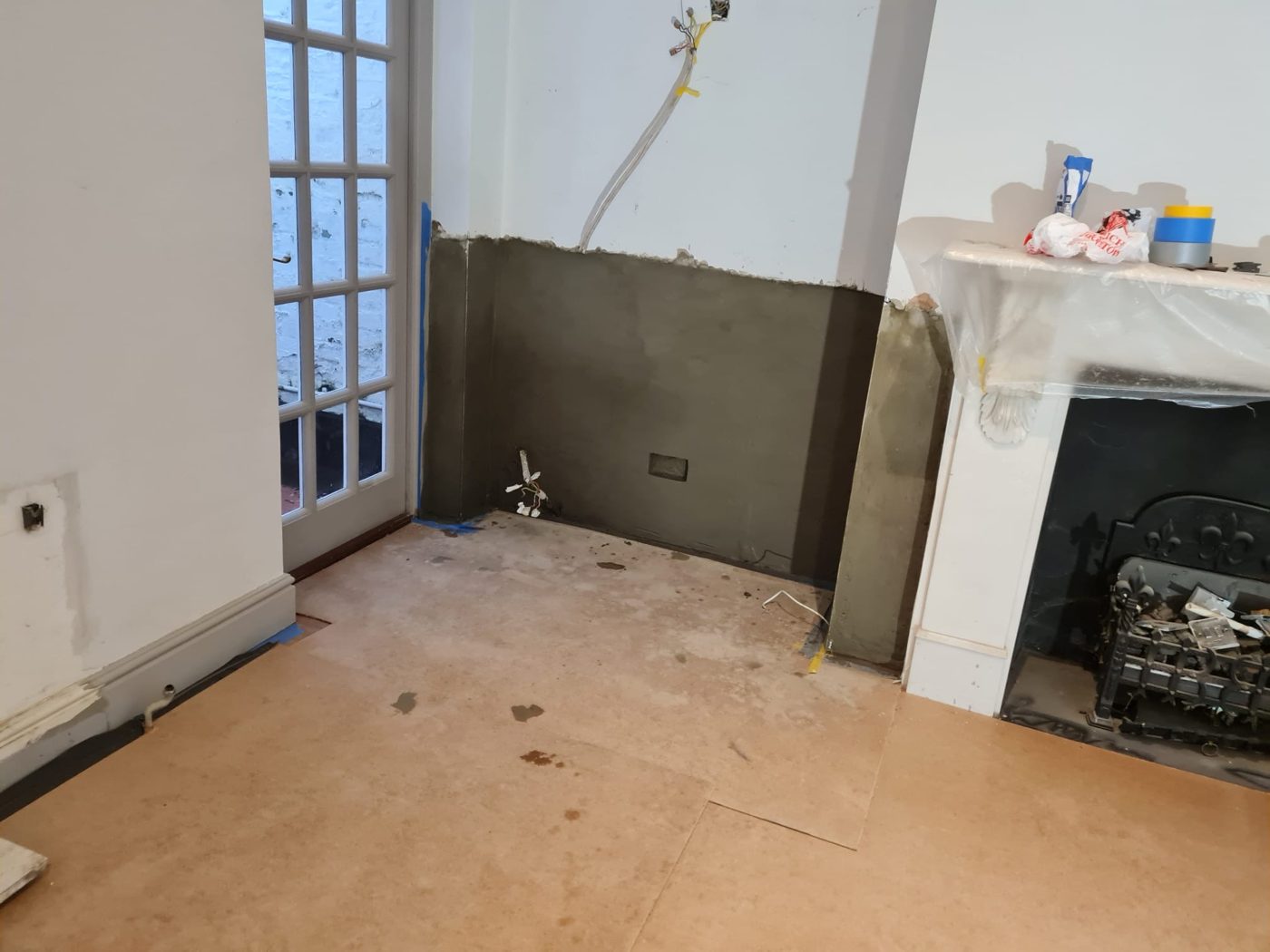
- Replastered with a salt-resistant render system to BS 6576, so remaining salts in the wall cannot stain the new finish while the wall dries out.
- Left it ready for decoration with advice on breathable paint and drying times.
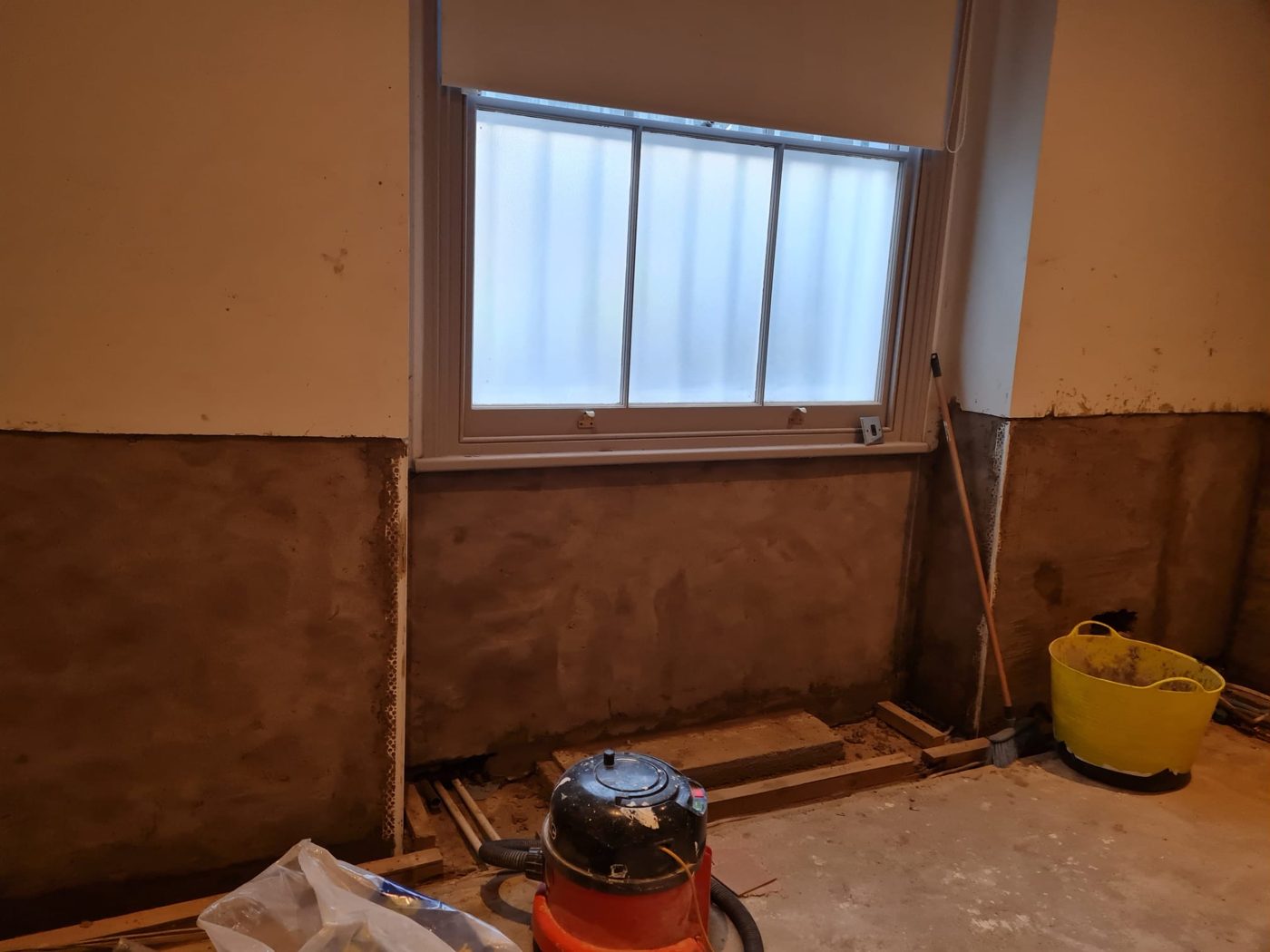
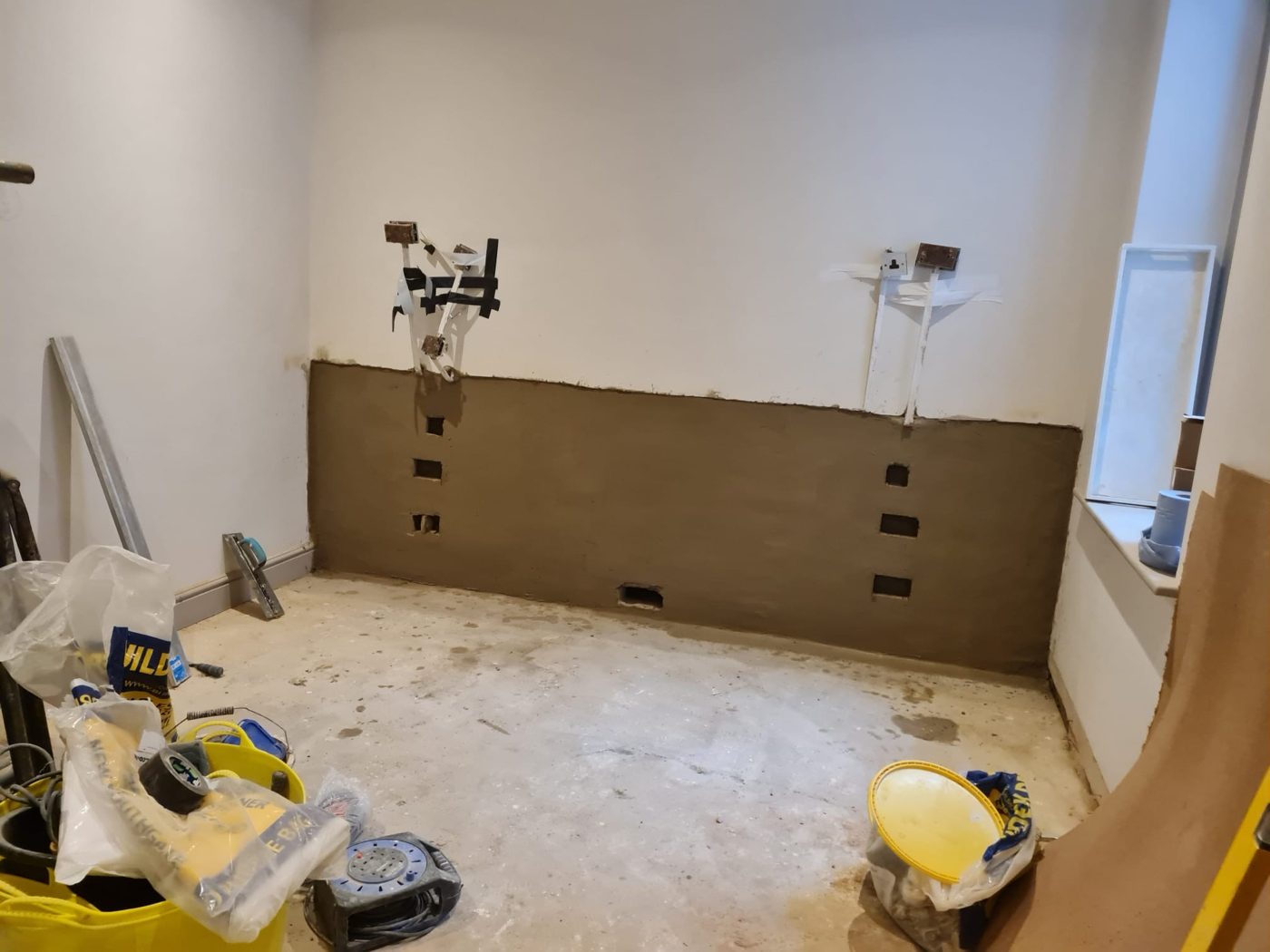
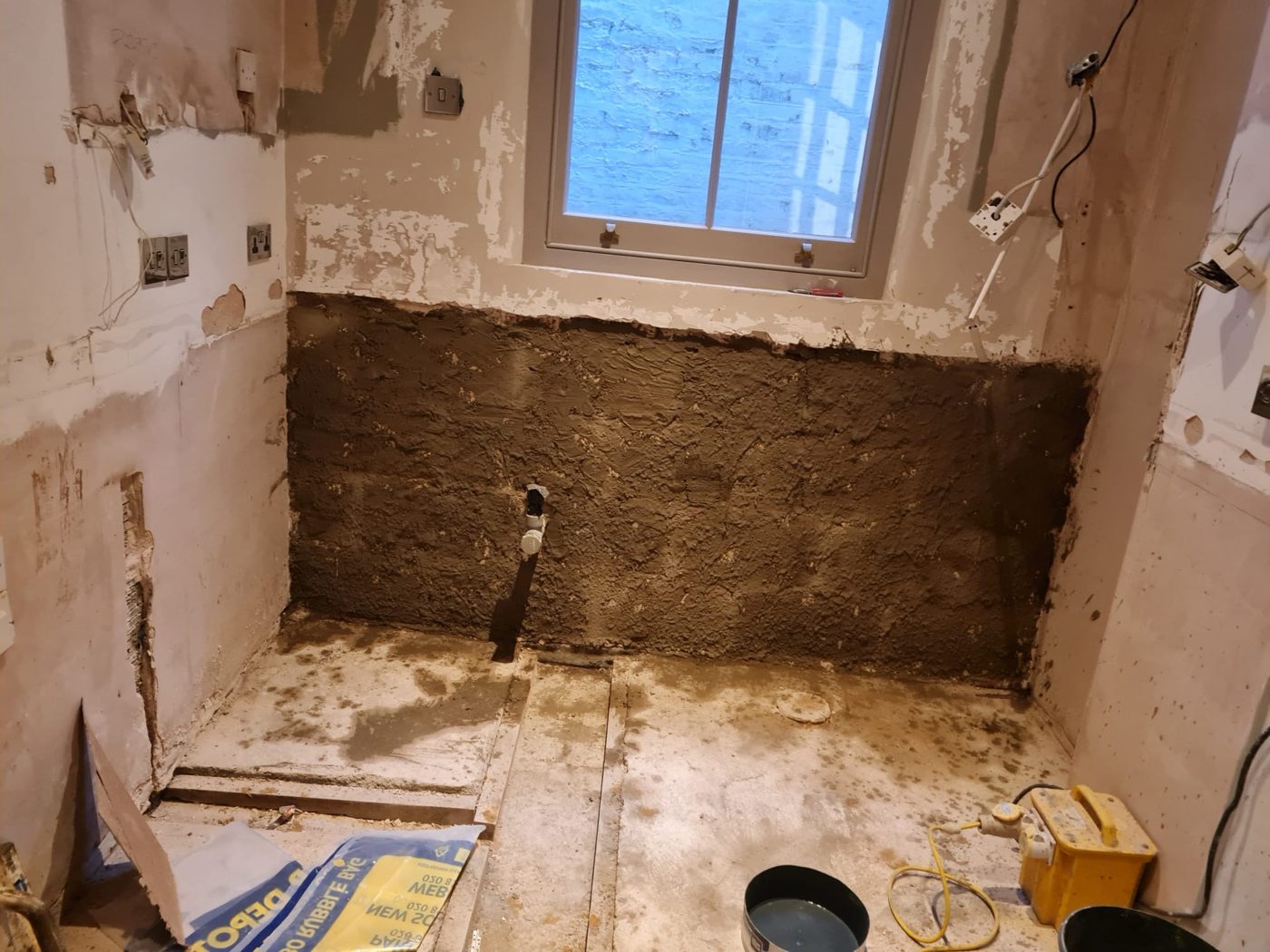
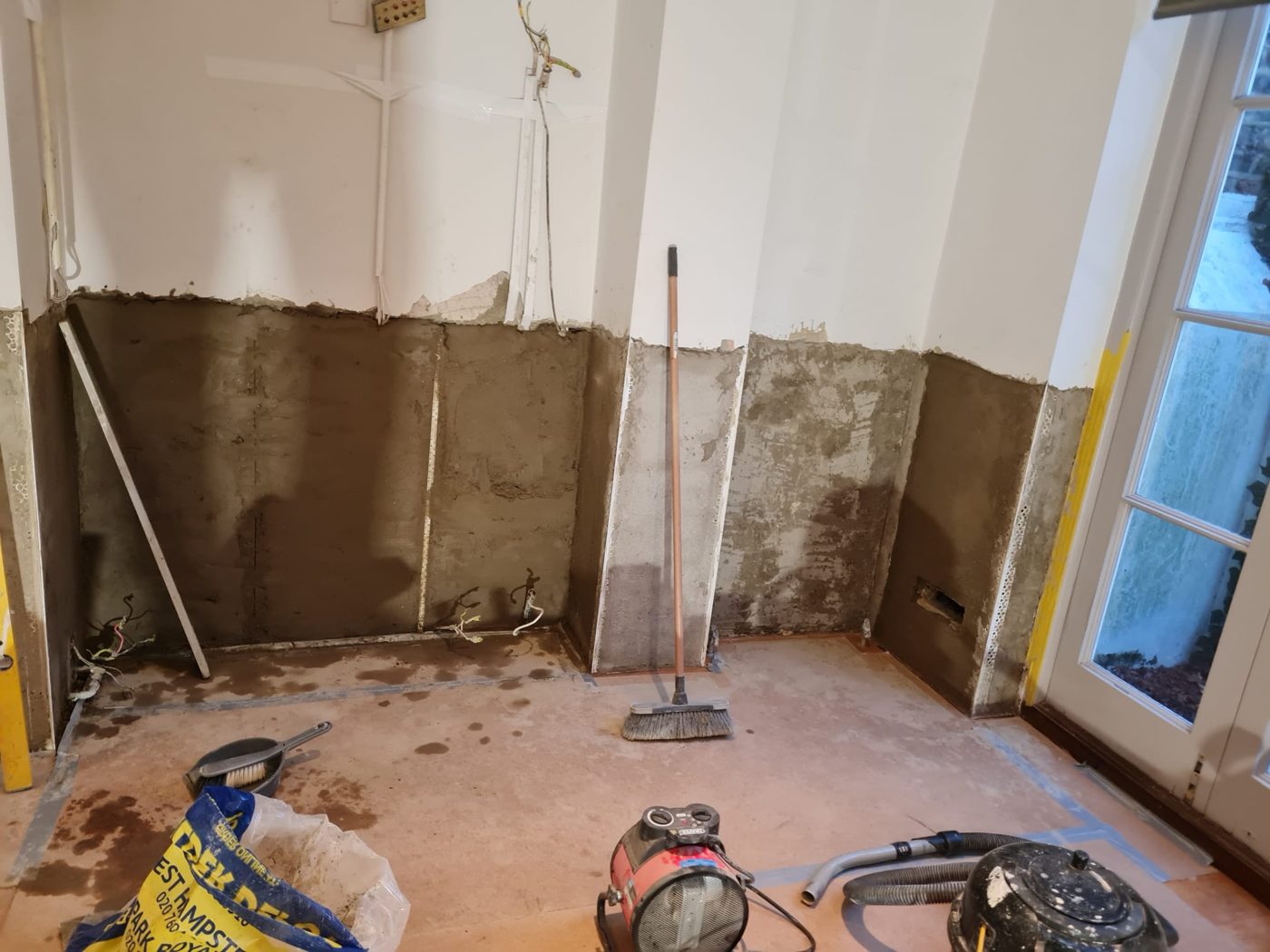
The result
The walls are now protected against moisture coming through from outside, the new render holds back the salts, and the flat could be redecorated without the damp coming back through. The work is covered by our written guarantee.
Damp walls in your flat?
Start with a damp survey – the fee is deducted from the cost of the works if you go ahead. See our damp proofing services, or call 020 3432 4842.